India vs Afghanistan 2026 Winner: India Won the Second ODI
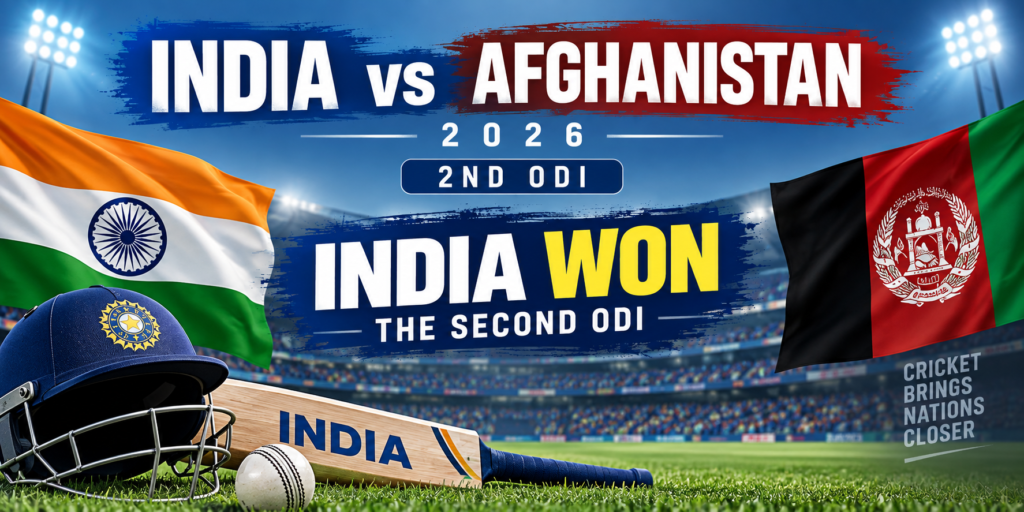
India vs Afghanistan 2026: India won the second ODI, taking a commanding victory over Afghanistan.
For readers searching for the India vs Afghanistan 2026 winner, India won this completed ODI by a decisive margin. A later third ODI scorecard listing is dated June 20 at Chennai, so the series winner should not be assumed from the second match alone without checking that final scorecard.
India are the confirmed winners of the second ODI against Afghanistan in 2026. They beat Afghanistan by 170 runs on June 17, 2026, in a day-night match at Lucknow. India posted 402 before Afghanistan were dismissed for 232, with the innings ending in 44.3 overs.
India vs Afghanistan 2026 Winner: Match Result and Scorecard
India won the second ODI by 170 runs at the BRSABV Ekana Cricket Stadium in Lucknow. The match summary on Cricinfo’s second ODI scorecard records India’s 402 and Afghanistan’s 232 in reply.
| Team | Total | Wickets | Overs | Result |
|---|---|---|---|---|
| India | 402 | All out | 49.5 | Won by 170 runs |
| Afghanistan | 232 | All out | 44.3 | Lost |
India set a target of 403, which required Afghanistan to score at more than eight runs an over from the start. Afghanistan’s 232 left them 170 runs short, making this a result by runs rather than wickets.

The official result, margin, and standout numbers
The clearest standout number is India’s 402. Reaching that total in 49.5 overs means the batting unit scored at roughly 8.07 runs per over, an aggressive rate for a 50-over international.
Afghanistan scored 232 in 44.3 overs, at about 5.21 per over. That difference in scoring speed decided the match. The available result summary confirms the final totals, overs, and margin, but readers should use the full scorecard for the leading run scorer, best bowling figures, player of the match, and partnership details.
What the scoreline confirms
India’s margin was substantial because they combined a 400-plus total with a complete bowling dismissal. Afghanistan did not run out of overs, so the loss came through wickets rather than a shortened chase.
A 170-run ODI victory reflects more than one strong passage of play. India needed sustained scoring with the bat, then enough wickets to prevent Afghanistan from batting through 50 overs.
The result itself does not prove which individual had the better match. Player of the match honors and the winning team are separate facts, and the scorecard should settle both.
How India Took Control of the India vs Afghanistan ODI Match
India’s total gave Afghanistan almost no room for a slow start. A target of 403 demands a high-risk chase, because even a solid run rate can leave a side behind the required pace.
India’s scoring rate also shows that their innings did not depend on simply protecting wickets. They kept moving at more than eight an over until the final ball of the 50th over. Afghanistan, in contrast, finished well below the pace needed to threaten the target.
The batting partnerships and turning point
The central turning point was India’s ability to turn an ODI innings into a 402-run total. Afghanistan needed 8.06 runs per over at the beginning of their reply. Once their scoring rate dropped below that mark, the required rate would have climbed with every quiet over.
A scorecard can identify the partnership that created the largest jump in momentum. Without verified partnership figures, it would be wrong to assign that role to a particular pair. Still, the final score makes the wider pattern clear: India built enough runs to turn every Afghanistan wicket into added pressure.
The bowlers and fielders who changed the game
Afghanistan were all out in 44.3 overs, so India’s bowling attack took all 10 wickets before the chase reached its scheduled finish. That matters more than economy alone in a chase of 403.
Bowling sides often defend a huge target by attacking the stumps, using the field to deny easy boundaries, and forcing batters to take risks. India had the freedom to stay patient because Afghanistan needed quick runs throughout the innings.
The full scorecard is the place to confirm whether pace, spin, catches, or run-outs produced the decisive wickets. It should also be used to verify the leading wicket-taker rather than relying on match highlights or social posts.
What the India vs Afghanistan ODI Result Means for 2026
The second ODI gave India a major confidence boost, particularly after producing a complete batting-and-bowling performance. For Afghanistan, the result showed how difficult it is to recover when an opponent posts a total above 400.
However, one result should not be treated as a verdict on either team’s long-term strength. Afghanistan still had the chance to respond in the remaining fixture, while India needed to maintain the same batting intent and wicket-taking discipline.
The next match, player form, and key takeaways
The tour schedule lists the first ODI in Dharamsala, the second in Lucknow, and the third in Chennai. Cricket fans can review the 2026 Afghanistan tour of India schedule to follow the match sequence and venues.
India’s main takeaway is simple: a 400-plus score becomes far more valuable when the bowlers finish the job. Afghanistan’s next step is to improve its ability to manage high chases without losing wickets in clusters.
For both teams, individual form should be judged from the verified batting and bowling cards. Final totals reveal the result, but they do not show every strong spell, recovery partnership, or fielding contribution.
Final Thoughts
India won the second India vs Afghanistan ODI 2026 by 170 runs after making 402 and dismissing Afghanistan for 232. The defining factor was India’s scoring rate, which set Afghanistan an imposing target of 403.
The complete scorecard will confirm the standout batter, best bowling spell, and player of the match. Check the latest official match record before treating the second ODI result as the final outcome of the series.
Interested in the latest news? Also Read: Trending News

